
Every CEO and board will be pushing AI scale and demanding return this year. That creates the largest opportunity in a generation. It also means every token will be scrutinized.
We talk about AI in terms of capability: what it can do, how fast it reasons and how many parameters the model has. Benchmarks get published with every new release. Naturally, the model leaderboards immediately shift, and the conversation moves on to the next release. The novel model capabilities, without an economic conversion, is not much more than a science project.
At enterprise scale, one question needs to be answered by every single developer on the team: what does each unit of AI work actually cost, and what does it produce?
What Is the New Tokenomics of Enterprise AI?
I run a company that builds AI agent systems. Every day I watch model produce in eleven seconds what used to take someone an entire work day. And every time it happens, a meter runs in the background:
- Input tokens
- output tokens
- cached tokens
- reasoning tokens
A receipt. That receipt is the most important document in the modern economy.
I firmly believer that we are living through the arrival of a new unit of account: the token. Specifically, the language model token, which is the atomic unit of work an AI model consumes and produces. For the first time in industrial history, we have a universal, machine-priced quantity for cognitive output. It is portable across tasks, vendors, languages, and across humans and machines.
That has never been true before.
The Equivalency
Labor markets have always struggled with converting work to value. Billable hours reward the slow and salaries often reward the political. We’ve priced cognition with proxies for a century because we had nothing better.
Perhaps tokens are better.
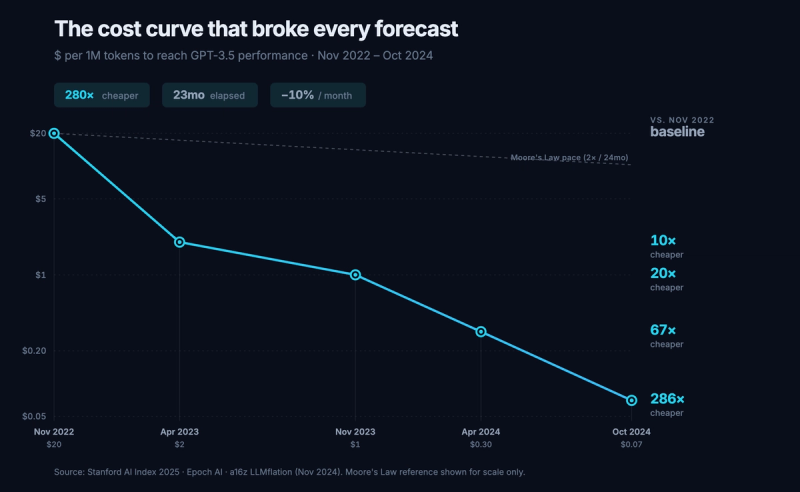
A model that produces 800 output tokens of a well-reasoned memo is doing something you can measure, replay, cache, distill, and compare. When a human writes that same memo, the output can now be measured on the same axis.
The market is already doing this.
Pricing pages at OpenAI, Anthropic, Google, and the open weight hosts are the first real public rate cards the knowledge economy has ever had. A million output tokens from a frontier model currently costs somewhere between a sandwich and a steak dinner.
So here is the question we need to ask ourselves: How many tokens is your work worth?
Is it Fair?
There is a general sense of discomfort when we confront this equivalency. Perhaps its the novelty of the fact but it is strange to measure a human's cognitive labor with the same ruler as a GPU's output. Frankly, the objections are fair. Humans carry accountability. Humans build trust. Humans exercise judgment in the presence of ambiguity, ethics, and consequence.
A token does not sign a contract. A token does not get fired.
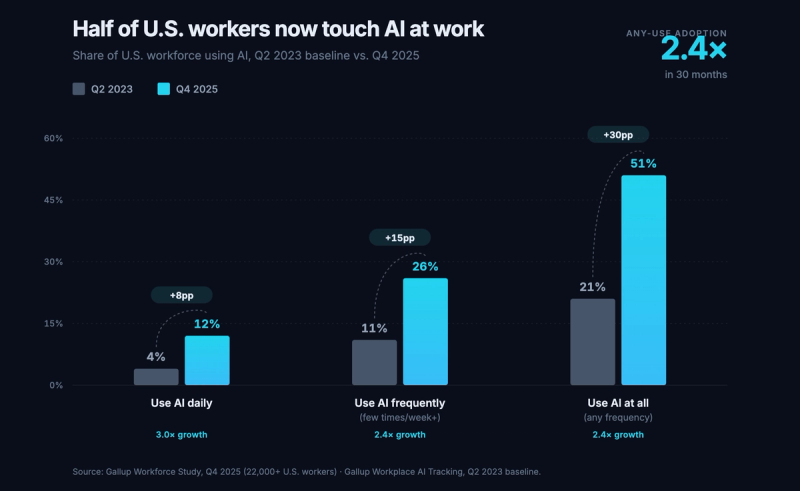
The reality is that human premium has moved both upstream and downstream of the artifact layer of cognitive work. Simply put, the artifact you create (the memo, the computer code, the slide deck) is now cheap. Humans are still valuable, but that value has shifted to what happens before the artifact and after it.
Upstream lives in taste, framing, problem selection, and the relationships that generate the prompt. Downstream lives in accountability, negotiation, judgment, and the willingness to stake a reputation on the output. The middle, where you actually produce the words and the code and the analysis, is being repriced in tokens. That middle used to be most of the job.
Lessons Learned as a Founder
There are three key takeaways I’ve learned over the last year running my companies.
- I have to be able to measure my organizations in tokens produced and tokens consumed per dollar of revenue.
- I have to hire for the upstream and the downstream. Pay a premium for taste, judgment, and accountability.
- I have to ask the difficult question: How many tokens was that work worth?
The builders and business leaders who lean into the equivalency, rather than flinch from it, are the ones who will perform optimally in the era of AI Tokenomics.