
For thirty years, the internet has been a place designed for humans: websites rendered in browsers, interfaces built for fingers and eyes, and applications designed for developer consumption.
But in early 2026, a series of moves from the world’s largest technology companies has made one thing very clear: AI agents are becoming first-class citizens of the internet.
Given this fact, software builders who don't acknowledge this shift risk building for a world that no longer exists.
What Is the OpenClaw Explosion?
The most vivid proof of this shift happened at NVIDIA GTC 2026 in San Jose. CEO Jensen Huang dedicated a considerable amount of time to OpenClaw, the open-source agentic framework that allows AI agents to operate autonomously on local hardware.
Huang compared OpenClaw to Linux, calling it a foundational platform that arrived at exactly the right moment, and declared thatevery company in the world needs an OpenClaw strategy.
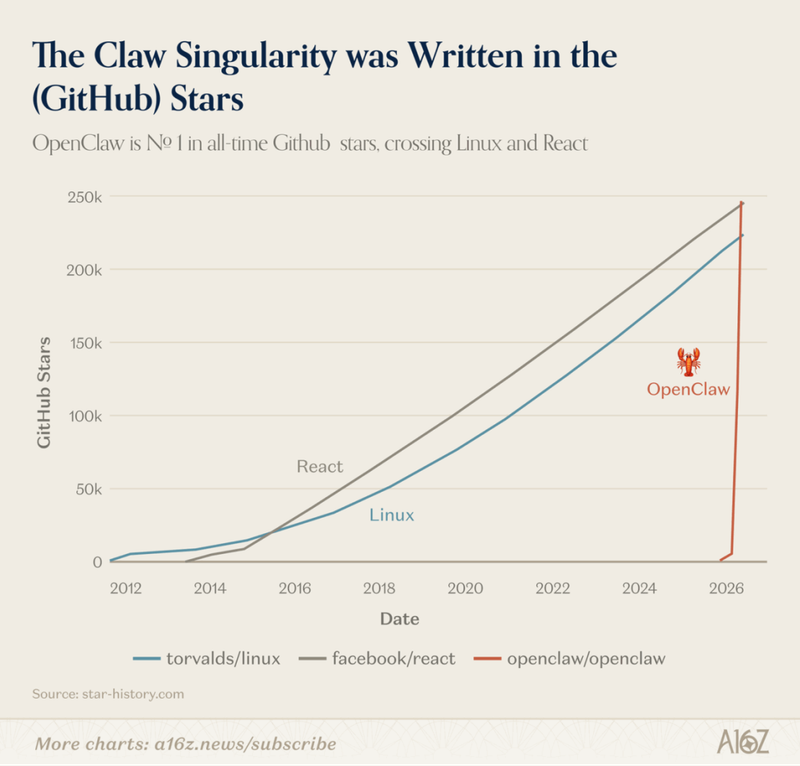
The market demand for OpenClaw could not be understated. OpenClaw gained 60,000 GitHub stars within 72 hours of its January 2026 platform launch and surpassed 100,000 stars within two months.
By mid-March, it had crossed 300,000 stars, surpassing React’s decade-long total and ultimately becoming the most-starred non-aggregator software project in GitHub history.
This is a market signal of extraordinary magnitude! Developers, enterprises, and even consumers are hungry for truly proactive AI.
People want AI that can operate autonomously on their behalf.
How Is the Internet Being Rebuilt for Agents?
The internet’s underlying infrastructure is being reengineered for this new class of user. In February 2026, Cloudflare launched its “Markdown for Agents” beta. This is a feature the company explicitly framed as treating AI agents as “first-class citizens” alongside human visitors.
Quick technical explanation to follow:The feature uses standard HTTP content negotiation so when an AI agent sends a request with an Accept: text/markdown header, Cloudflare intercepts it at the edge, converts the HTML to structured markdown, and delivers a representation that cuts token consumption by about 80%.
Cloudflare powers approximately 20% of the web.
This is is an infrastructure-level acknowledgment that machines are a primary audience for web content.
Similarly, Google shipped WebMCP in early preview through Chrome 146 Canary. WebMCP allows websites to expose structured tools directly to AI agents. Instead of agents burning tokens analyzing screenshots to find buttons, they can invoke functions like buyTicket(destination, date) directly.
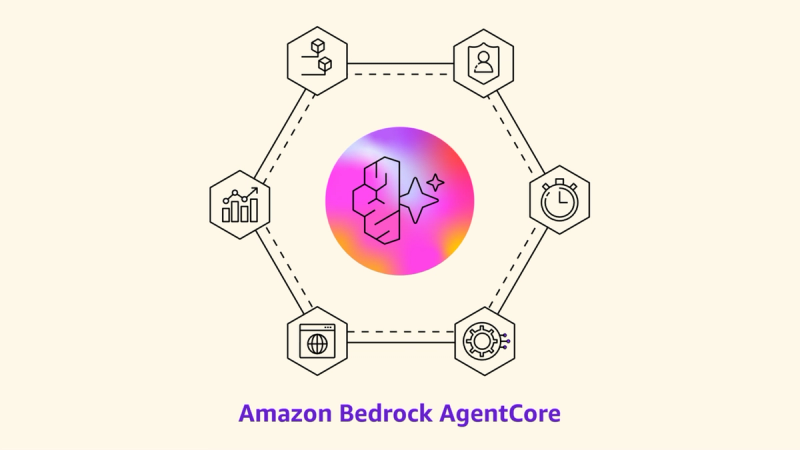
Amazon Web Services (AWS), the leading cloud provider on the planet, underscores this direction with Bedrock AgentCore, which provides a unified gateway allowing agents to discover tools via semantic search rather than hardcoded configurations. Why does this matter? If you have 30 tools, the agent loads all 30 into its context window regardless of whether they're relevant to the current task. This approach is brittle and doesn't scale.
Semantic search flips this.
Instead of the agent carrying a static registry, it describes what it's trying to accomplish in natural language, and the gateway returns the most relevant tools for that specific intent.
Why Are Cloud Giants Betting on Agentic Infrastructure?
The scale of investment in agentic infrastructure is massive. In February 2026, Amazon invested $50 billion in OpenAI and the two companies announced a strategic partnership to co-develop a Stateful Runtime Environment on Amazon Bedrock.
This is a system designed specifically for AI agents to maintain context, remember prior work, operate across tools, and access compute.
AWS became the exclusive third-party cloud distributor of OpenAI Frontier, an enterprise platform for building, deploying, and managing teams of AI agents with shared context and built-in governance.
A little more tech:AWS’s AgentCore platform goes well beyond model hosting. It includes a secure browser runtime for agents to execute web-based workflows, a code interpreter for sandboxed code execution, persistent memory for agents to learn from interactions, identity management for agent authentication, and end-to-end observability for monitoring agent behavior in production.
How Should Builders Prepare for the Model of Tomorrow?
All of this can be summarized in a single must-do for anyone building software today.
Boris Cherny, creator of Claude Code at Anthropic, said it clearly:“Don’t build for the model of today. Build for the model six months from now.”
If you are building a web application today and your only interface is a browser-rendered UI, you are building for a shrinking percentage of your future traffic.
If your API requires a human in the loop to be useful, you are adding friction to the fastest-growing class of consumers.
If your product does not expose structured capabilities that agents can discover and use, you are invisible to the next generation of users.
The builders who will define the next era of the web are the ones who understand this: the software you ship today will be consumed both by people clicking buttons and by agents invoking capabilities.