
A friend asked me last week how someone actually becomes a Michelin-starred chef. Culinary school? Apprenticeship under a screaming sous chef? Sheer stubbornness? I have no idea.
I fed the question to my AI, got a great answer, sent it along, moved on.
My model did not move on.
Somewhere in a memory summary or a retrieval index, "interested in Michelin-star culinary careers" got stapled to my identity. I cook, but I am not set on a mission to become a chef, never mind a Michelin-starred chef. But now, statistically, I'm a guy who might.
What we often forget in our day-to-day use of AI is that AI memory: it's a dataset. And good datasets persist.
Why Is Every Question a Write to Your Profile?
It's important to recognize what actually happens when you talk to an AI with memory turned on. Your questions do not simply disappear into the ether. They get logged, compressed, embedded, and folded back into a model of who you are. That model has no idea which questions are truly relevant to you.
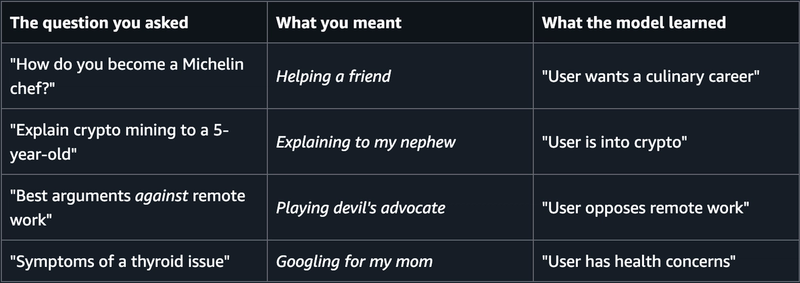
Each row suddenly becomes a mislabeled training example. If you string enough of them together, your context stops being a clean signal. It becomes noise.
Why this breaks things, technically
Most consumer memory systems run on one of two mechanisms:
- Summarization. Periodically compressing your history into durable "facts" about you.
- Retrieval. Embedding past conversations and pulling semantically similar ones back into context when they seem relevant.
Both share the same blind spot and that is that neither can tell importance from ephemeral curiosity. A single stray Michelin question gets embedded and retrieved with the same confidence as a fact about you doing your real work. Your curiosity and conviction look identical to a cosine similarity score.
Key takeaway: This is context poisoning, and it is structurally identical to data poisoning in a training pipeline. A handful of irrelevant examples quietly degrade the signal for everything downstream.
What Tools Already Exist?
The fix is already in prod.
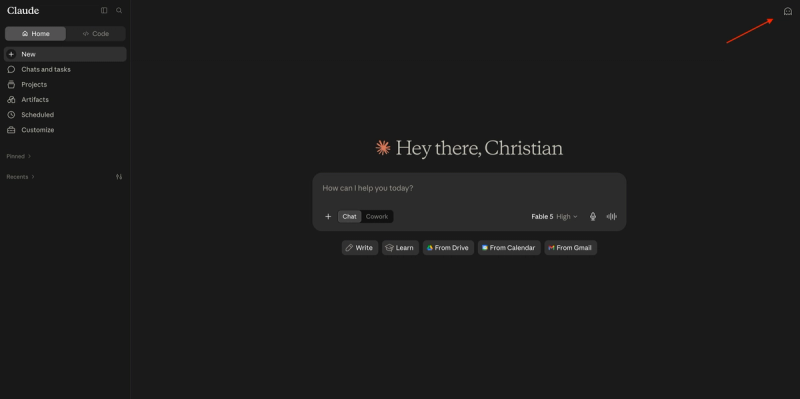
- Claude has incognito chats. Excluded from memory, from future summaries, from retrieval.
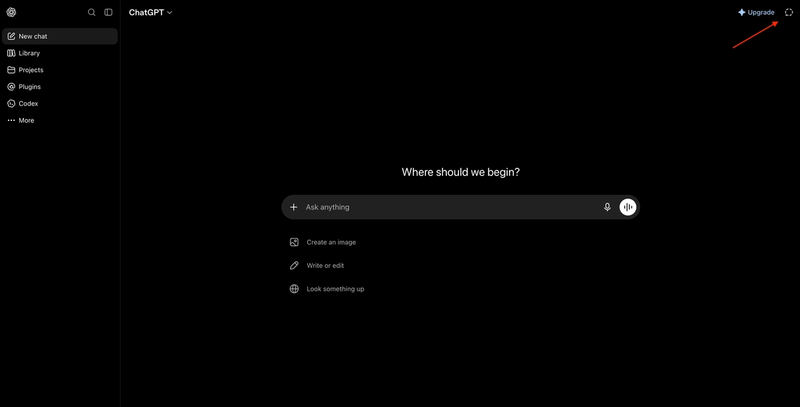
- ChatGPT has Temporary Chat. Uses no existing memories, creates no new ones.
- Perplexity has incognito threads. Disabled Memories, no personalization from past chats, and the thread expires after 24 hours.
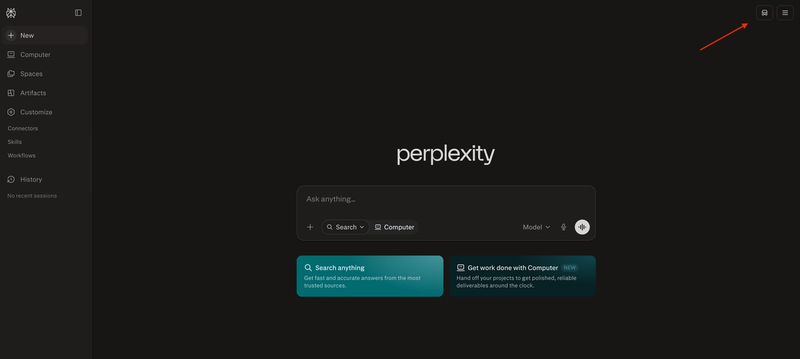
Both work. Both are real. And both are tucked behind a ghost icon or a toggle you will only find if you already knew to look.
That is backwards. If memory poisoning is a genuine cost, the thing that prevents it should not be an easter egg for power users. It should sit in proximity of the send button, because the average person has no idea their AI is profiling them one throwaway question at a time.
What you can do now
Until the button gets louder, do the work the interface won't:
- Ask the identity question first. Before you hit enter: does this represent me, or am I just passing through?
- Default to incognito for the "not me" stuff. Favors for friends, one-off curiosity, devil's advocate, "asking for research."
- Let only the durable things write to memory. Your real work, your actual recurring interests, the stuff you'd want the model to compound on.
- Audit it occasionally. Most tools let you view stored memories. Read yours. Delete the noise.
Treat your context window like a codebase, not a diary. No stray writes. No unreviewed commits.
And for the love of a good dining experience, we need more Michelin-starred chefs!
I'm going deep on quantum right now, so you should too. My learning module at quantumlearner.dev takes you from zero to real QPUs on Amazon Braket.