As we continue our journey into the world of quantum computing, we start to wonder why we haven't been able to leverage this technology at scale before, and why is this becoming a possibility now?
Most quantum headlines you read talk about number of qubits. The number of qubits, however, does not address the real rate-limiting factor. What makes a quantum computer effective is how many operations a machine can run before its answer dissolves into noise. That limit is set by fault tolerance, and it is the problem that research in quantum computing is continuously trying to solve.
Qubits are fragile. Anything from a stray vibration, a disruption from a magnetic field, or the heat of the hardware itself can corrupt the quantum state in the middle of a calculation. Fault tolerance is the ability to compute correctly anyway. It runs on quantum error correction, which spreads one reliable "logical" qubit across many noisy physical ones. It then detects and fixes errors faster than they pile up.
What Is Quantum Fault Tolerance and Why Does It Matter?
Why does this matter? If you run a circuit on today's hardware, errors accumulate within a few hundred operations. The useful algorithms, the ones that crack molecular simulation, materials discovery, and large-scale optimization, need millions to billions of reliable operations. Fault tolerance enables us to run as many computations as is necessary to solve real-world problems.
We are currently in (but quickly nearing the end of) the noisy era. The signal of progress has moved from physical qubit counts to logical qubit counts. A thousand noisy qubits you cannot error-correct are useless. Given this fact, the obstacle becomes overhead: conventional surface codes can demand on the order of a thousand physical qubits to protect a single logical one. Our goal is to drive that ratio down, prove stable operation below threshold, and unlock the possibilities of quantum computing.
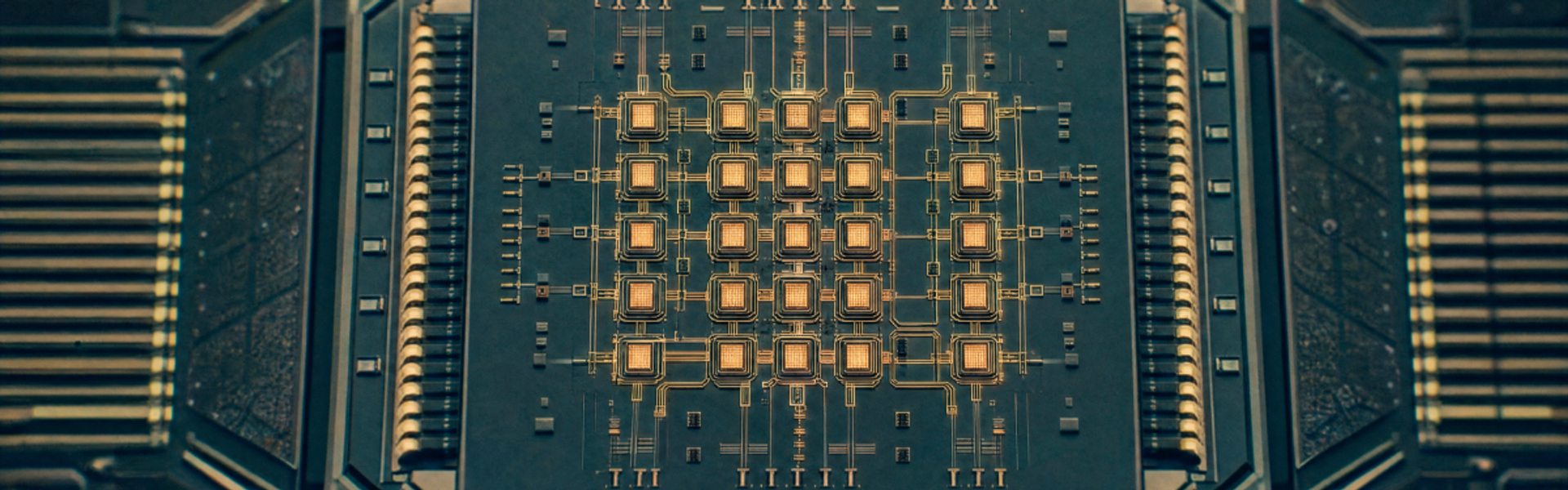
AWS is pushing on both sides of that frontier. In its own labs, the AWS Center for Quantum Computing built Ocelot, a chip that bakes error correction into the hardware using cat qubits. Those qubits intrinsically suppress bit-flip errors, which leaves only phase-flip errors for a simple repetition code to mop up. (More on bit-flip and phase-flip errors in the comments). AWS reports up to 90% fewer qubits spent on correction, fabricated with standard microelectronics processes so the design can scale.
On Braket, AWS is bringing fault-tolerant hardware to the cloud through its deepened partnership with QuEra. The target is Libra in 2028. Libra is a megaquop machine running roughly one million reliable logical operations across more than 256 error-corrected logical qubits at a 10⁻⁶ logical error rate. It's built on reconfigurable neutral atoms. The destination is bigger than any single device though. AWS wants quantum sitting in the stack as a standard compute modality, alongside CPUs, GPUs, and AI accelerators.
So here is the takeaway: fault tolerance now has an end-date on the calendar. Start thinking in logical qubits and prototype hybrid quantum-classical workflows on Braket so the moment error-corrected hardware lands, you already know how to use it.